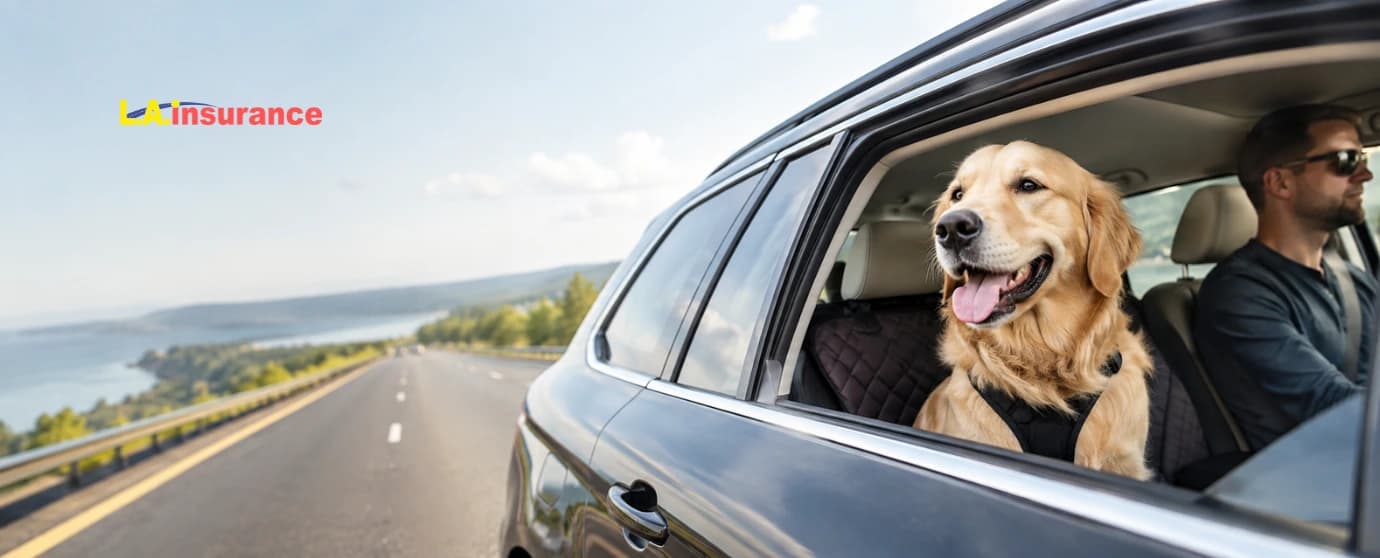
Publish Date: 01-09-2026
Auto Insurance
Does Auto Insurance Cover Pets in the Car?
Whether you regularly drive with your pets in the car or only take them along occasionally, it’s worth knowing whether your auto insurance covers them. Accidents can happen at any time, and if you’re involved in a car accident, your pets can be seriously injured, potentially resulting in expensive emergency treatment and veterinary care.
So, does auto insurance cover pets? Well, that depends on your insurer and the coverage you have. Some insurers offer pet injury coverage that may help pay for eligible veterinary expenses after a covered accident, while standard auto insurance policies may not cover your pet’s injuries.
If you’re trying to figure out whether your pets can be covered by your auto insurance policy, this guide explains the types of coverage that may apply, what happens if you’re at fault or another driver causes the accident, what happens if you hurt someone else’s pet, when your pet may not be covered, and how to file a claim for eligible veterinary expenses.
What Type of Car Insurance Coverage May Cover Your Pet?
Before discussing how coverage applies after an accident, it’s important to understand which types of car insurance may help cover your pet’s injuries. Depending on your insurer and policy, pet injury coverage or collision coverage may come into play, although they protect you in different ways.
If you’re looking for an auto insurance policy that may cover your pet, check with your insurer to see whether pet injury coverage is available and what it includes. An insurance agency can also help you explore available options specifically for pet coverage. It’s important to understand the specifics, so let’s explore how these coverages apply to your pet.
Pet Injury Coverage
Pet injury coverage is an optional benefit that some auto insurers offer to help pay for veterinary expenses if your pet is injured or dies in a covered car accident. Depending on the policy, it may cover costs such as emergency treatment, diagnostic tests, surgery, medication, or other eligible veterinary services.
Keep in mind that coverage varies by insurer, so check your policy for eligibility requirements, coverage limits, deductibles, and exclusions. According to Experian and The Zebra, pet injury coverage commonly has a $1,000 limit, although some insurers may offer up to $2,000 in veterinary benefits. This coverage is also often limited to cats and dogs, and death benefits may also apply if your pet doesn’t survive.
Some insurers may include pet injury coverage with certain collision and comprehensive policies, while others may offer it as an optional endorsement. If your policy includes pet injury coverage, it may help reduce your out-of-pocket costs after a covered accident. However, you should understand the specific terms of your policy before assuming your pet’s veterinary bills will be covered.
Collision and Comprehensive Coverage
Some auto policies may provide pet injury coverage through collision or comprehensive coverage. If your policy includes this benefit, it may help pay eligible veterinary expenses if your pet is injured in a covered accident or provide a death benefit if your pet does not survive.
Collision coverage generally helps pay to repair or replace your vehicle after a covered collision, while comprehensive coverage helps cover damage from non-collision events, such as theft, vandalism, severe weather, or hitting an animal.
However, having collision or comprehensive coverage does not automatically mean your pet’s veterinary expenses are covered. So, make sure to review your policy to understand whether pet injury coverage is included and what limits, deductibles, and exclusions apply.
What Happens If You Get into an Accident with a Pet in the Car?
If you’re involved in a car accident while your pet is in the vehicle, the coverage available for your pet’s injuries can depend on who caused the accident, the type of coverage you have, and your insurer’s policy terms. Your pet may be eligible for veterinary benefits under pet injury coverage, while other insurance coverage may apply depending on the circumstances.
When You’re At-Fault
If you cause the accident and your pet is injured, your auto insurance may cover eligible veterinary expenses if your policy includes pet injury coverage. Without this coverage, your standard auto insurance may not pay for your pet’s veterinary bills, leaving you responsible for those expenses.
Your collision coverage may help pay to repair or replace your vehicle after the accident, but it generally does not cover your pet’s injuries unless your policy also provides specific pet injury benefits. Check your policy for coverage limits, deductibles, and exclusions before filing a claim.
When Another Driver Is At-Fault
If another driver causes the accident and your pet is injured, the at-fault driver’s liability insurance may provide coverage for your pet’s injuries, depending on the applicable state laws and circumstances of the accident.
Typically, pets are treated as personal property under insurance laws. So, to be more specific, the property damage liability coverage of the at-fault driver would primarily cover your pet up to their coverage limits.
However, if the at-fault driver only has minimum liability coverage, it may not be enough to cover all of your pet’s veterinary expenses. In that case, your own pet injury coverage may also apply if you have it.
If your pet needs emergency treatment after the accident, seek veterinary care promptly and keep records of the treatment and expenses. You should also document the accident and notify the relevant insurance company as soon as possible to determine which coverage may apply.
What Happens If You Hurt Someone Else’s Pet in a Car Accident?
Similarly, if you’re found responsible for injuring someone else’s pet in a car accident, your liability coverage may help pay for the pet’s veterinary expenses or provide compensation if the pet dies, depending on applicable state laws and your policy’s terms. If you only have minimum liability coverage and the treatment costs exceed your coverage limit, you may have to pay the remaining expenses out of pocket.
If the pet owner sues you, your liability coverage may also help cover certain legal defense costs and covered settlements or judgments, subject to your policy’s terms and coverage limits. However, if you’re not responsible for the accident and the other person’s pet is injured in a collision with your vehicle, the other driver’s insurance may cover the pet’s veterinary expenses, depending on the circumstances and applicable coverage. Otherwise, the pet owner may have to pay the expenses out of pocket.
Situations When Your Pet May Not Be Covered by Auto Insurance
Although some auto insurance policies may cover your pet’s injuries after a car accident, coverage isn’t guaranteed in every situation. Your policy may exclude or limit coverage in circumstances such as:
- Your policy doesn’t include pet injury coverage: Standard auto insurance may not cover your pet’s veterinary expenses unless your policy includes a specific pet injury benefit.
- The accident isn’t covered: If the incident falls outside the terms of your policy, your pet’s injuries may not be covered.
- Your pet isn’t eligible: Some pet injury coverage is limited to certain animals, such as dogs and cats. Birds, reptiles, and other exotic animals may be excluded from coverage.
- The expenses aren’t eligible: Your policy may exclude certain veterinary services, treatments, or expenses from coverage.
- You exceed the coverage limit: If your pet’s veterinary expenses are higher than the applicable limit, you may have to pay the remaining costs out of pocket.
- You violate policy conditions: Your policy may limit or exclude coverage if you violate certain policy conditions, such as driving under the influence or engaging in prohibited conduct.
How to File an Auto Insurance Claim for Vet Bills After a Car Accident?
If your pet is injured in a car accident and your policy provides pet injury coverage, filing a claim can help you recover eligible veterinary expenses. Here are the steps to apply and start the claims process.
- Get your pet emergency care: Take your pet to a veterinarian as soon as possible, especially if they have visible injuries or show signs of distress. Keep all invoices, receipts, prescriptions, and veterinary records related to the accident.
- Report the accident: Notify your insurer as soon as possible and provide details about the accident, including when and where it occurred, what happened, and whether another driver was involved.
- Document the accident: Take photos of the vehicles, accident scene, and any visible injuries to your pet, if it’s safe to do so. Collect the other driver's insurance and contact information and any available witness details.
- Submit your veterinary bills: Provide your insurer with itemized veterinary bills and other documentation it requests to support your claim. Your insurer may also require medical records or proof that the treatment was related to the accident.
- Review the claim decision: Your insurer will review your policy and documentation to determine whether the expenses are covered. If approved, you may receive reimbursement for eligible expenses up to the applicable coverage limit, after any deductible that applies.
Keep copies of all documents and communications related to your claim. If you’re unsure whether your policy covers your pet’s treatment, make sure to contact your insurer before assuming the expenses are eligible.
Is Car Insurance Pet Coverage Enough for Your Pet?
If an accident leads to serious injuries such as a broken spine or internal bleeding, your pet may need emergency veterinary treatment followed by diagnostic tests, hospitalization, or even surgery.
According to WebMD, here are some average costs for veterinary services:
- Veterinary Visit: $100 to $150
- Blood test: $80 to $200
- X-ray or ultrasound: $150 to $600
- Hospitalization of 3 to 5 days: $2,000 to $3,500
- Emergency surgery: $2,000 to $5,000
If your auto insurance policy has a $1,000 to $2,000 pet injury coverage limit, these emergency veterinary bills could quickly exceed your available coverage. You may therefore want to consider pet insurance if you’re looking for broader protection against unexpected veterinary expenses.
If you regularly drive or travel with your pet, having pet insurance in addition to available auto insurance with pet injury coverage may provide an extra layer of financial protection. However, review the terms of both policies to understand their respective limits, deductibles, exclusions, and covered expenses.
Tips to Keep Your Pet Safe While Driving
No matter how carefully you drive or how much insurance coverage you have, an accident can change everything. Your pet could suffer serious or even life-threatening injuries in a crash, making it important to take precautions before you get on the road. Here are some practical steps you can take to keep your pet as safe as possible while driving and reduce the risk of serious injuries if an accident occurs.
- Use a pet carrier: Secure your pet in a sturdy, appropriately sized carrier to prevent them from moving around the vehicle.
- Use a pet seat belt: If your pet isn't in a carrier, use a crash-tested harness or pet seat belt designed for vehicle travel.
- Keep your pet in the back seat: The back seat generally keeps pets farther from front airbags, which can cause serious injuries. Never let your pet ride in your lap: A pet in your lap can distract you and may be seriously injured during a crash.
- Keep windows and doors secure: Make sure your pet can't jump out of an open window or escape when a door is opened.
- Take regular breaks: On longer trips, stop periodically to let your pet drink water, stretch, and relieve themselves. Never leave your pet alone in a parked car: Extreme temperatures inside a vehicle can become dangerous quickly.
- Avoid letting your pet roam freely: Keeping your pet restrained can reduce distractions and help limit movement during sudden braking or a collision.
The Bottom Line: Does Auto Insurance Cover Pets in the Car?
Again, that depends on your insurer and policy terms. If your auto insurance includes pet injury coverage through collision or comprehensive coverage or as an optional add-on, it may help pay eligible veterinary expenses after a covered accident.
If you frequently drive with your pet, consider reviewing your coverage limits and exploring pet injury coverage for added protection. If you need help finding affordable auto insurance with pet injury coverage, you can contact us to explore coverage options with a free quote and expert advice.
Frequently Asked Questions (FAQs)
Are pets covered under auto insurance?
Pets may be covered under auto insurance if your policy includes pet injury coverage. Depending on the policy, it may help pay eligible veterinary expenses after a covered accident, subject to limits and exclusions. Generally, pet injury coverage is mainly limited to cats and dogs.
Can I add a pet to my existing auto insurance policy?
Yes, you may be able to add pet injury coverage to your existing auto insurance policy if your insurer offers it. Availability, eligibility, coverage limits, and costs vary by insurer, so check with your provider to see whether you qualify.
Does liability insurance cover a pet in a car?
It may, if another driver causes the accident. Their property damage liability coverage may help pay your pet’s eligible veterinary expenses, based on your state laws and policy limits.
Does collision insurance cover pet injuries?
Collision coverage generally pays for damage to your vehicle, but some policies may include pet injury coverage with collision coverage. Check your policy for the specific benefits available.
Does comprehensive insurance cover pets in the car?
Some insurers may provide pet injury coverage through comprehensive coverage. Whether your pet is covered depends on the policy’s terms, limits, and exclusions.
Does auto insurance cover a pet’s pre-existing condition?
Generally, auto insurance pet injury coverage is intended for injuries resulting from a covered accident and may not cover pre-existing conditions or unrelated veterinary expenses.
Editorial Disclaimer
The resources on this blog are researched and created by experienced insurance writers, then fact-checked and verified for accuracy to provide clear, general informational guidance. This content does not constitute professional insurance, legal, or financial advice. Coverage options and premium rates are subject to individual eligibility, underwriting guidelines, and state availability. For specific questions regarding your policy or to get an accurate quote, please contact a licensed L.A. Insurance agent directly. We're an independent agency and not a direct insurance carrier. For more information on how we operate and handle your data, please see our Terms and Conditions and Privacy Policy.
Tag :
Auto insurance
best insurance
LA Insurance
cheap car insurance

What is Term Life Insurance?
Term life insurance is a type of life insurance policy that provides coverage for a specific period, generally 10, 15, 20, 30, or even 40 years.

Types of Life Insurance and How They Differ?
If you’re shopping for life insurance, you’ve probably come across different types of life insurance, such as term life insurance, whole life insurance, and universal life insurance.

What Is Life Insurance?
If you’re thinking about getting a life insurance policy, it’s important to understand what it is and how it works. Simply put, life insurance is a type of financial protection that provides money to your chosen beneficiaries after your death.

Does Car Insurance Cover Rust Damage?
Rust can damage many parts of your car and may become more severe over time if left untreated.
Does Insurance Cover a Tree Falling on Your Car?
Whether your car is parked out in the open under or near a tree, or you’re driving when a tree suddenly falls on your car, either way, it can leave your car severely damaged or even wrecked.
Does Car Insurance Cover Snow Damage?
Your car is more susceptible to damage in winter when it snows. As long as it’s out in the open, it can get damaged by snow at any moment.