Publish Date: 01-03-2023
Auto Insurance
Last Updated: 09-07-2026
Driving In Rain
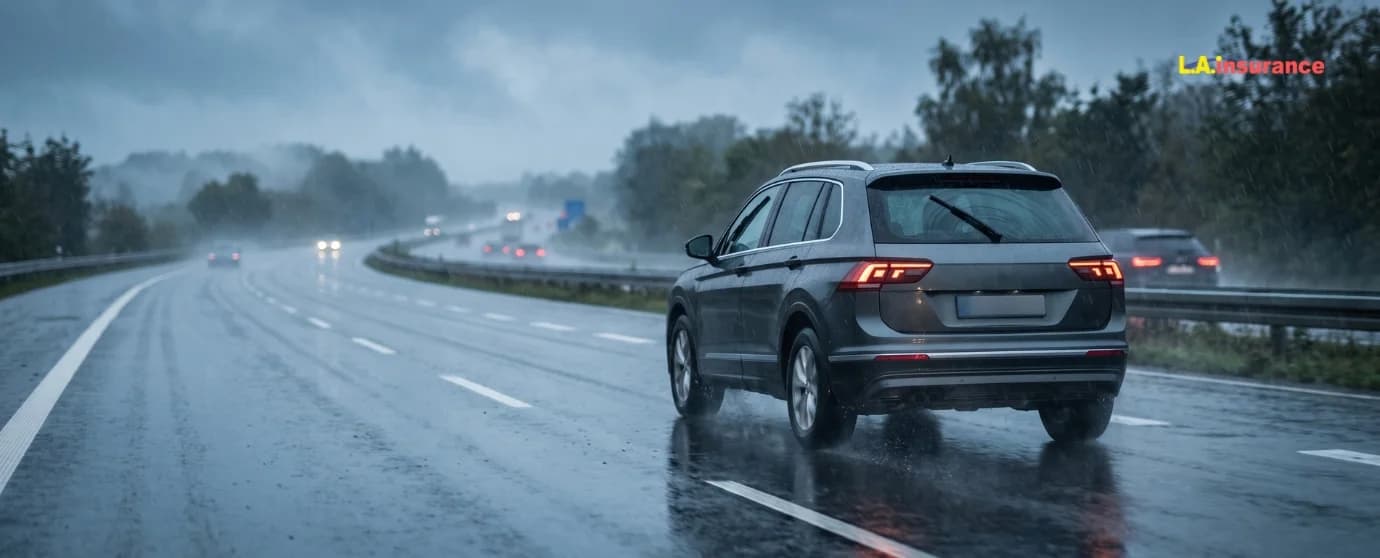
Driving in the rain can be difficult. Just as it can be challenging to drive at night, heavy rainfall often makes it harder to see the road, judge distances, and react to changing conditions. It's especially difficult during a downpour when visibility is limited, even with your windshield wipers running at full speed.
Some drivers choose to pull over until the rain eases, while others continue driving and may unexpectedly hydroplane through standing water. Every situation is different, but knowing how to prepare and respond can help you stay safer on wet roads.
L.A. Insurance has put together a few practical tips to help you drive more confidently and safely when rain begins to fall.
Delay Your Trip If Possible
The first thing to do when driving in the rain is to wait until the weather improves whenever possible. Many traffic safety experts recommend avoiding unnecessary travel during heavy rain because reduced visibility and slippery roads increase the risk of crashes.
Sometimes a little patience is the safest decision you can make. Waiting even a short time for a storm to pass may give road crews time to clear standing water and improve driving conditions.
However, if you do need to drive in the rain, there are several important safety tips to keep in mind.
Slow Down and Avoid Sudden Movements
Slow down! Reducing your speed is one of the best ways to stay safe when driving in wet weather. Wet pavement reduces traction, making it easier for your tires to lose contact with the road.
Hydroplaning can occur when a layer of water builds up between your tires and the pavement, causing you to temporarily lose steering and braking control. According to the Federal Highway Administration, as little as one twelfth of an inch of water can contribute to hydroplaning under the right conditions.
Maintain a greater following distance than you normally would and avoid sudden acceleration, hard braking, or sharp steering. Smooth, gradual movements help your tires maintain traction.
Cruise control should also be avoided when driving in the rain. If your vehicle begins to hydroplane, you'll need to ease off the accelerator naturally, something cruise control cannot do for you.
Know What to Do If You Hydroplane
Hydroplaning can happen quickly, but staying calm is important.
If your vehicle begins to hydroplane:
- Ease off the accelerator slowly.
- Keep both hands firmly on the steering wheel.
- Avoid slamming on the brakes.
- Steer gently in the direction you want the vehicle to travel.
- Wait until your tires regain contact with the road before accelerating again.
Most hydroplaning incidents last only a few moments, but reacting calmly can help you regain control safely.
Improve Visibility During Rainstorms
Another great tip is to make sure you can clearly see the road ahead. This may seem obvious, but visibility plays a major role in rainy weather safety.
Turn on your headlights whenever rain reduces visibility. Not only will they help you see the road better, but they'll also make your vehicle easier for other drivers to see.
Use your windshield wipers and window defroster to keep your windshield clear. Keeping your vehicle properly ventilated also helps reduce interior fog that can block your view.
If rainfall becomes so heavy that you can no longer see the road ahead, safely pull off the roadway and wait until conditions improve. Never stop in an active traffic lane.
Prepare Your Vehicle Before Rainy Weather
Safe driving begins before you leave home.
Before driving in wet weather, make sure your vehicle is ready by checking:
- Tire tread depth and tire pressure.
- Windshield wiper blades for signs of wear.
- Washer fluid levels.
- Headlights, brake lights, and turn signals.
- Brakes and steering if you notice unusual performance.
A well maintained vehicle is better equipped to handle wet roads and sudden weather changes.
Drive Safely Every Time It Rains
There are many ways to stay safe when driving in the rain, but the most important thing to remember is that safe driving habits make the biggest difference. Slowing down, improving visibility, avoiding sudden movements, and preparing your vehicle before a storm can help reduce your risk on wet roads.
Every rainstorm is different, but understanding the basics can help reduce anxiety and give you more confidence behind the wheel.
Whether you're commuting across town or heading out on a longer trip, L.A. Insurance encourages you to stay alert, drive carefully, and arrive safely no matter the weather.
FAQs About Driving in Rain
Is it safe to drive through standing water?
It's best to avoid driving through standing water whenever possible. Even shallow water can hide potholes, road damage, or debris, and deeper water can cause your vehicle to hydroplane or stall. If you can't determine how deep the water is, turn around and find a safer route.
Should I use high beams or low beams when driving in heavy rain?
Use your low beam headlights in rainy conditions. Low beams improve your visibility and make it easier for other drivers to see your vehicle without creating the glare that high beams can produce in heavy rain. In many states, headlights are also required whenever windshield wipers are in use.
Can worn tires make driving in the rain more dangerous?
Yes. Tires with worn tread have a harder time channeling water away from the road surface, increasing the risk of hydroplaning and reducing traction. Checking your tire tread and maintaining proper tire pressure are two of the best ways to improve wet-weather driving safety.
Why are roads more slippery when it first starts raining?
The first rainfall after a dry period can be especially hazardous because water mixes with oil, grease, and other residue that has built up on the pavement. This creates a slick surface until the rain washes those materials away, so drivers should slow down and allow extra stopping distance.
How can I tell if it's too dangerous to keep driving in heavy rain?
If rainfall becomes so heavy that you can't clearly see the road, lane markings, or vehicles ahead, the safest choice is to pull over at a safe location and wait for conditions to improve. Never stop in a travel lane or on the shoulder unless it's absolutely necessary.
Editorial Disclaimer
The resources on this blog are researched and created by experienced insurance writers, then fact-checked and verified for accuracy to provide clear, general informational guidance. This content does not constitute professional insurance, legal, or financial advice. Coverage options and premium rates are subject to individual eligibility, underwriting guidelines, and state availability. For specific questions regarding your policy or to get an accurate quote, please contact a licensed L.A. Insurance agent directly. We're an independent agency and not a direct insurance carrier. For more information on how we operate and handle your data, please see our Terms and Conditions and Privacy Policy.
Tag :
Auto insurance

Does Car Insurance Cover Rust Damage?
Rust can damage many parts of your car and may become more severe over time if left untreated.
Does Insurance Cover a Tree Falling on Your Car?
Whether your car is parked out in the open under or near a tree, or you’re driving when a tree suddenly falls on your car, either way, it can leave your car severely damaged or even wrecked.
Does Car Insurance Cover Snow Damage?
Your car is more susceptible to damage in winter when it snows. As long as it’s out in the open, it can get damaged by snow at any moment.
Does Auto Insurance Cover Pets in the Car?
Whether you regularly drive with your pets in the car or only take them along occasionally, it’s worth knowing whether your auto insurance covers them.
Do You Need Car Insurance to Cover Road Trips?
If you’re wondering whether your standard auto insurance covers road trips, the good news is that it typically does.
Mechanical Breakdown Insurance: What Is It, and How Does It Work?
One of the biggest risks of owning a car is sudden mechanical failure, and the worst part is it can happen at any time.