Publish Date: 13-06-2026
Auto Insurance
SR-22 vs. SR-21 vs. SR-26: What is the Difference?
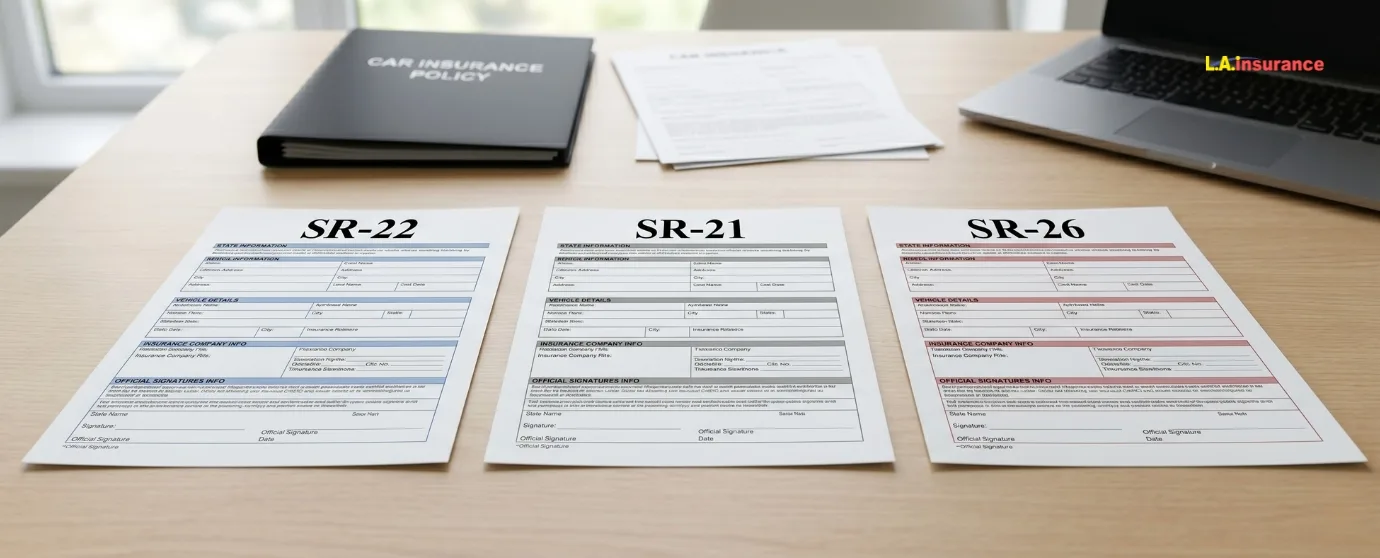
SR-21, SR-22, and SR-26 are all insurance-related forms used by states and insurance companies. However, they each serve very different purposes. An SR-21 usually verifies that you had insurance coverage at the time of an accident. An SR-22 proves you carry the required liability insurance, while an SR-26 reports that an SR-22 filing is no longer active.
In this informative article, we’ll compare SR-21, SR-22, and SR-26 forms in simple terms so you can better understand what each form means and when it may apply to your situation.
What Is the Difference Between SR-21, SR-22, and SR-26?
The main difference between SR-21, SR-22, and SR-26 forms is the purpose each one serves. Although all three are connected to financial responsibility laws, they are used in very different situations.
An SR-21 form verifies that you had valid auto insurance coverage at the time of an accident or traffic incident. Insurance companies usually file this form when the state requests proof of existing coverage.
An SR-22 form is different because it proves you currently carry the required liability insurance after serious violations like a DUI or license suspension. States often require this filing to monitor continuous insurance coverage.
An SR-26 form is used to report that an SR-22 filing is no longer active. This usually happens after a policy cancellation, coverage lapse, or completion of the SR-22 requirement period.
SR-21 vs. SR-22 vs. SR-26 Comparison Table
Here’s a simple comparison table that you can follow for better understanding:
Form | Main Purpose | When It’s Used | Filed By | What It Means |
SR-21 | Verifies past insurance coverage | After an accident or traffic incident | Insurance company | You had valid coverage at the time of the event |
SR-22 | Proves ongoing financial responsibility | After serious driving violations | Insurance company | Your required insurance coverage is active |
SR-26 | Cancels or terminates an SR-22 filing | After policy cancellation, lapse, or completion | Insurance company | Your SR-22 coverage is no longer active |
What Is an SR-21 Form?
An SR-21 form is a proof of insurance filing that confirms you had valid auto insurance coverage at the time of an accident or traffic incident. States may request this form after a crash to verify that your policy was active on the date of the event. Unlike an SR-22, an SR-21 does not track future insurance coverage or monitor high-risk drivers.
What Is an SR-22 Form?
An SR-22 form helps states monitor continuous liability insurance coverage after serious driving violations. Insurance companies file this document with the state to confirm that a high-risk driver remains properly insured. SR-22 filings involve ongoing monitoring, drivers must keep their insurance policies active during the required filing period.
What Is an SR-26 Form?
An SR-26 form notifies the state that an SR-22 filing is no longer active. Insurance companies usually submit this filing after a policy cancellation, coverage lapse, or completion of the required SR-22 period. So, If the filing happens before the required period ends, the state may suspend the driver’s license until a new SR-22 is filed.
Related Resource:
- What Is FR-44 Insurance?
- SR-22 Vs. Regular Auto Insurance: What’s the Difference?
- Can I get auto insurance with a suspended license?
Final Thoughts
SR-21, SR-22, and SR-26 forms all relate to auto insurance and state financial responsibility laws, but they serve different purposes. An SR-21 verifies past insurance coverage after an accident, an SR-22 proves ongoing liability insurance after serious violations, and an SR-26 reports that an SR-22 filing has ended. Understanding how these forms work can help you avoid coverage lapses, license suspensions, and confusion about your insurance requirements.
SR-21 vs. SR-22 vs. SR-26 FAQs
Is an SR-21 the same as an SR-22?
No. An SR-21 verifies that you had insurance coverage at the time of an accident, while an SR-22 proves you currently carry the required liability insurance after serious driving violations.
Does an SR-26 cancel an SR-22?
Yes. An SR-26 is filed by the insurance company to notify the state that an SR-22 filing is no longer active because the policy ended, lapsed, or was canceled.
Which states use SR-21 Forms?
SR-21 forms are not used in every state. Some states may request them after accidents or traffic incidents to verify proof of insurance coverage. Requirements vary depending on state laws.
Who files SR-21, SR-22, and SR-26 forms?
Insurance companies usually file SR-21, SR-22, and SR-26 forms directly with the DMV or state agency on behalf of the driver.
Do all drivers need these insurance forms?
No. Most drivers never need these filings. They are usually required only after accidents, license suspensions, serious traffic violations, or other situations involving financial responsibility laws.
Editorial Disclaimer
The resources on this blog are researched and created by experienced insurance writers, then fact-checked and verified for accuracy to provide clear, general informational guidance. This content does not constitute professional insurance, legal, or financial advice. Coverage options and premium rates are subject to individual eligibility, underwriting guidelines, and state availability. For specific questions regarding your policy or to get an accurate quote, please contact a licensed L.A. Insurance agent directly. We're an independent agency and not a direct insurance carrier. For more information on how we operate and handle your data, please see our Terms and Conditions and Privacy Policy.
Tag :
fast car insurance
car maintenance
cheap car insurance

What is Term Life Insurance?
Term life insurance is a type of life insurance policy that provides coverage for a specific period, generally 10, 15, 20, 30, or even 40 years.

Types of Life Insurance and How They Differ?
If you’re shopping for life insurance, you’ve probably come across different types of life insurance, such as term life insurance, whole life insurance, and universal life insurance.

What Is Life Insurance?
If you’re thinking about getting a life insurance policy, it’s important to understand what it is and how it works. Simply put, life insurance is a type of financial protection that provides money to your chosen beneficiaries after your death.

Does Car Insurance Cover Rust Damage?
Rust can damage many parts of your car and may become more severe over time if left untreated.
Does Insurance Cover a Tree Falling on Your Car?
Whether your car is parked out in the open under or near a tree, or you’re driving when a tree suddenly falls on your car, either way, it can leave your car severely damaged or even wrecked.
Does Car Insurance Cover Snow Damage?
Your car is more susceptible to damage in winter when it snows. As long as it’s out in the open, it can get damaged by snow at any moment.