Publish Date: 17-05-2026
Auto Insurance
15 Common Car Insurance Myths You Need to Be Careful About
Whether you’re shopping for car insurance, exploring better coverage options, or planning to claim your policy, any misconception or myth about car insurance can have dangerous financial consequences, as it can lead to the wrong decision.
You may be at greater risk if you are uninsured, or you could be paying higher premiums with unnecessary coverage, or you may even end up with denied claims. When you make your decisions based on myths or any misconceptions, it can lead to significant financial loss.
The problem is that many drivers assume these myths are facts because they sound logical or are widely repeated. So, that’s why you should always verify through credible sources, such as state government websites or a reliable insurance provider.
It’s also important to fact-check information to keep yourself protected from misinformation. This guide debunks 15 common car insurance myths to help you stay properly informed to ensure you make the right decision about your coverage.
15 Common Car Insurance Myths Debunked
There can be a lot of assumptions and interpretations when it comes to car insurance-related information. Some of which come from close people like friends and family, while others are picked up from various online sources.
The thing is, whenever you come across any information about car insurance, it’s important to verify whether it’s legit or a widely repeated misconception. So, here are 15 debunked car insurance myths to help you make smarter and well-informed decisions, along with avoiding costly claims.
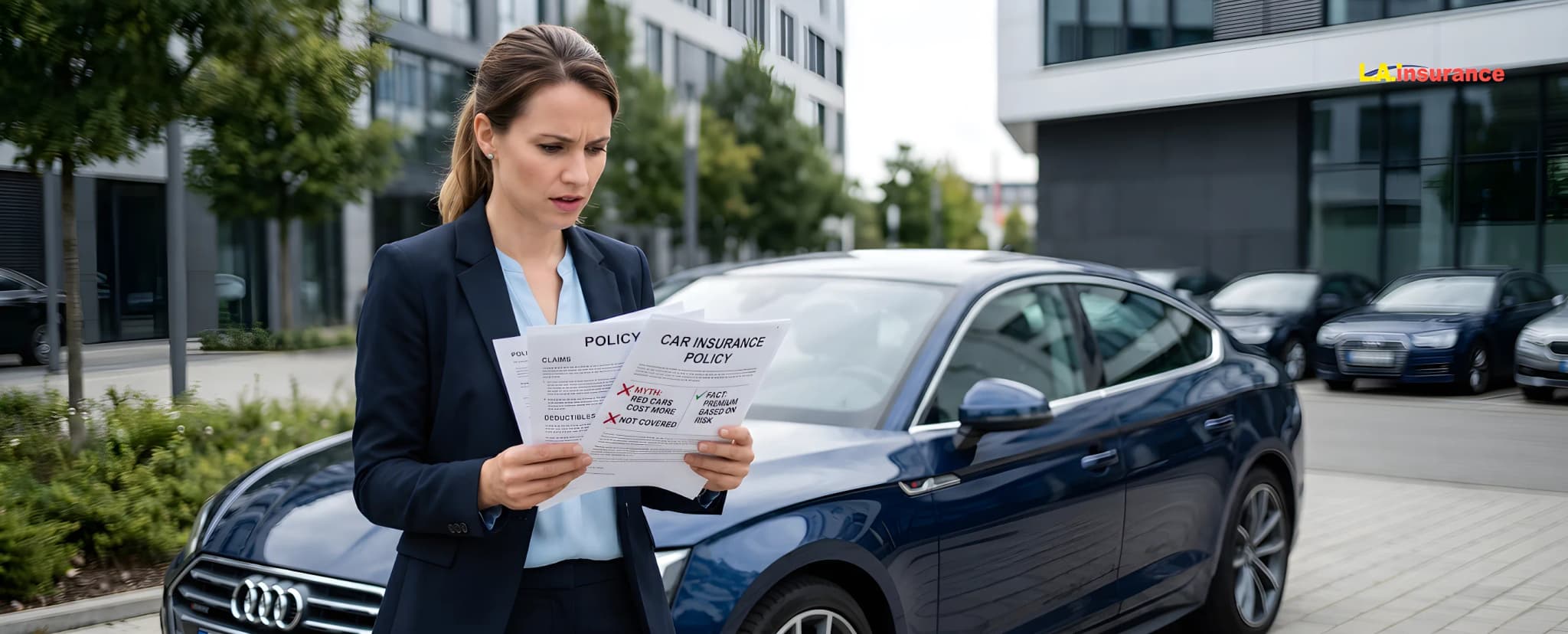
The Color of Your Car Affects Premiums
Whether your car is red, black, grey, silver, or white, its color has nothing to do with your premiums. In fact, insurers don’t consider color when calculating premiums. Instead, they focus on factors like the car’s make and model, age, engine size, safety features, and repair costs.
Often, red cars are perceived to have premiums, especially because the color red is often associated with speed, and it’s a common color for many sports cars. While black cars may be perceived to have a higher theft rate.
But these are all misconceptions as there are many sports colors of different colors, especially in recent years, and the risk of car theft isn’t linked to colors, rather the location, level of security, and the car’s make and model.
Older Cars are Cheaper to Insure
It’s a common assumption that older cars are always cheaper to insure, but that’s not always the case. While older vehicles may have a lower market value, which can reduce the cost of collision and comprehensive coverage, other factors can still make them expensive to insure.
For example, older cars may lack modern safety features, making them riskier to drive. They can also be more expensive to repair if parts are harder to find or no longer in production. In some cases, insurers may even consider older models to have a higher likelihood of breakdowns or mechanical issues.
In addition, cars that are over 20 years old may be classified as classic or collectible cars. These cars can increase in value over time, which may lead to higher repair or replacement costs and, in turn, higher premiums. Typically, insurance premiums are not solely based on a car’s age, rather it depends on its actual repair costs, replacement value, and overall risks, and the likelihood of claims.
Your Car Insurance Becomes More Expensive as You Get Older
Typically, car insurance is highest for the youngest drivers, mainly between the ages of 16 and 19, as they’re more prone to causing accidents compared to adult drivers aged 25 and above, based on CDC data. In fact, car insurance premiums actually go down by age, until you’re above 60, when it gradually starts to rise again.
Let’s explore how the average car insurance rates change by age.
- Ages 16 to 19: Premiums are the highest due to increased accident risk. On average, 16-year-olds may pay over $5,000 to $8,000 or more per year, 18-year-olds around $4,500 to $6,400, and 19-year-olds up to $5,000 annually.
- Age 25 and above: Rates begin to decline significantly as drivers gain experience, so from age 25, the average premiums usually decline ranging from $2,664 to $3,031 per year.
- Around Age 35: Premiums continue to decrease and can drop below $2,600 per year.
- Age 60 and above: Rates may gradually increase again, typically ranging from $2,220 to $2,680 or more per year.
Overall, car insurance premiums tend to decrease with age and driving experience, but may rise slightly again for senior drivers due to increased risk factors such as slower reaction times and health-related conditions.
The More Expensive the Car, the More it Costs to Insure
Another myth is that the more expensive the car, the more it costs to insure. But that’s not always true. While a higher retail price can increase premiums, insurance rates depend more on risk factors than the car’s price alone.
For example, according to Kelley Blue Book, the 2026 Toyota RAV4 has a retail price of around $37,991, while the 2026 BMW 330i costs close to $50,000. Despite being more affordable, the Toyota RAV4 can actually cost slightly more to insure.
On average, full coverage for a Toyota RAV4 costs about $244 per month (around $2,928 per year), while the BMW 330i costs about $243 per month (approximately $2,916 per year).
This is because insurers consider factors such as safety ratings, theft rates, repair costs, and overall risk, not just the vehicle’s market value. In many cases, some luxury models from brands like Acura or Volvo may even be cheaper to insure than certain non-luxury cars across various makes and models.
Your Credit Has No Effect on Your Car Insurance Rate
It’s a common belief that your credit score has no impact on your car insurance rate, but that’s not entirely true. In most U.S. states, insurers use a credit-based insurance score as one of the factors to determine premiums.
Drivers with lower credit scores are often considered higher risk, which can lead to higher insurance rates. On the other hand, those with stronger credit profiles may qualify for lower premiums.
However, this does not apply everywhere. States like California, Hawaii, Massachusetts, and Michigan prohibit insurers from using credit scores when calculating car insurance rates. So, while this factor is restricted in a few states, your credit can still play a significant role in determining your insurance premium in most parts of the U.S.
Military Personnel Pay More for Car Insurance
Military personnel are not typically charged higher car insurance premiums. In fact, many insurers offer discounted rates and exclusive benefits for active-duty service members, veterans, and their families.
There are many insurers that provide exclusive discounts for military personnel, which can help lower premiums. In addition, there are flexible policy options tailored to military life, such as storage coverage during deployment or easier adjustments when relocating.
While insurance rates still depend on factors like driving history, location, and vehicle type, military personnel often have access to better pricing and added benefits compared to standard policies. So, it’s another myth that military personnel pay more for car insurance; in fact, serving in the military can help you qualify for lower car insurance rates.
Personal Auto Insurance Covers Business Use
No, personal auto insurance does not cover business use. In fact, a standard personal auto insurance policy typically excludes coverage when a vehicle is used for business-related activities.
Personal policies are designed for everyday driving, such as commuting or running errands. If you use your vehicle for work, like making deliveries, transporting goods, or driving clients, your insurer may deny a claim if an accident occurs during that time. If you're relying on personal auto insurance for business use, you could be exposed to denied claims and unexpected out-of-pocket expenses.
Full Coverage Covers Everything
There isn’t a fixed or standard definition of full coverage in car insurance. In most cases, it refers to a combination of liability, collision, and comprehensive coverage. So, it does not mean complete protection against every possible situation.
While full coverage includes these core protections, your level of coverage still depends on the limits you choose and any optional coverage and add-ons you include. This means you can still be underinsured even with a full coverage policy.
For example, full coverage typically does not include roadside assistance, rental reimbursement, or mechanical repairs unless you add them separately. So, if your car breaks down or you need towing services, those costs may not be covered. In other words, full coverage does not mean everything is covered; it simply refers to a broader level of protection compared to minimum coverage.
You Only Need Liability Coverage Required by Law
Meeting your state’s minimum liability requirement may keep you legally compliant, but it doesn’t always provide enough financial protection. Liability coverage only pays for injuries and property damage you cause to others; it does not cover damage to your own vehicle or your medical expenses.
In many cases, minimum limits are relatively low and can be quickly exhausted after a serious accident. If the damages exceed your coverage, you may have to pay the remaining costs out of pocket, which can lead to significant financial strain.
To stay better protected, many drivers choose higher liability limits along with additional coverage such as collision, comprehensive, or uninsured/underinsured motorist protection.
These options can help cover your own losses and reduce the risk of large out-of-pocket expenses. In a nutshell, while minimum liability coverage may satisfy legal requirements, it may not be enough to fully protect you financially in the event of an accident.
Collision and Comprehensive Coverage are the Same
Collision and comprehensive coverage are not the same; they serve different purposes. While both help pay for damage to your own vehicle, they apply to different types of situations.
Collision coverage pays for damage caused by a crash, such as hitting another vehicle, an object, or even a rollover accident. On the other hand, comprehensive coverage protects against non-collision events like theft, vandalism, fire, natural disasters, or damage from falling objects. For example, if you hit a guardrail or another car, collision coverage would apply.
But if your car is stolen, damaged by a storm, or affected by fire, comprehensive coverage would cover those losses. These two coverages are not the same, they complement each other and are often included together in what is commonly referred to as full coverage.
Learn More: What Is the Difference Between Collision and Comprehensive Insurance?
Comprehensive Insurance Covers Everything
Comprehensive insurance does not cover everything. While it provides broad protection, it only applies to specific non-collision events and does not include every type of damage or loss.
Comprehensive coverage typically protects your vehicle against risks such as theft, vandalism, fire, natural disasters, falling objects, and damage caused by animals. However, it does not cover damage resulting from a collision, those situations are handled under collision coverage. It also doesn’t include routine maintenance, mechanical breakdowns, or normal wear and tear.
In addition, items stolen from inside your car, such as personal belongings, are usually not covered under comprehensive insurance. If you’re taking a break from driving or keeping your car parked for a period of time, some insurers allow you to maintain only comprehensive coverage.
If another vehicle hits your parked car, the damage won’t be covered unless you also have collision coverage. In short, comprehensive coverage is designed to protect against unexpected, non-collision risks, but it does not provide complete protection for every situation.
If a Friend Crashes Your Car, Their Insurance Pays
Many drivers assume that if a friend crashes their car, the friend’s insurance will cover the damages. However, in most cases, car insurance follows the vehicle, not the driver.
This means your auto insurance policy is typically the primary coverage if someone else is driving your car with your permission. If your friend causes an accident, your liability, collision, or other applicable coverages would generally be used first.
Your friend’s insurance may only come into play as secondary coverage if the damages exceed your policy limits or if certain conditions apply. However, this depends on the insurer and the policy terms.
It’s also important to note that if the driver is excluded from your policy or was using the vehicle without permission, your insurance may not cover the damages at all. If you’re allowing someone else to drive your car, it’s important to understand that you are still primarily responsible for what happens behind the wheel.
Your Auto Insurance Will Pay Your Loan or Lease if You Total Your Car
It might seem like your insurance will fully pay off your loan or lease if your car is totaled, but that’s not how it works. Standard auto insurance policies only cover the car’s actual cash value (ACV) at the time of the loss, not the remaining balance on your loan or lease.
Since cars depreciate over time, you could end up owing more than what your vehicle is worth. In that case, your insurance payout may fall short, leaving you responsible for paying the difference out of pocket.
To bridge this gap, you can opt for gap insurance coverage. This type of coverage helps pay the difference between your car’s actual cash value and the remaining loan or lease balance if your vehicle is totaled or stolen.
You Must Use the Repair Shop the Insurer Recommends
You are not required to use the repair shop recommended by your insurer. While insurance companies often suggest preferred or network repair shops, the final choice is yours.
Insurers recommend these shops because they have pre-approved agreements, which can make the repair process faster and more convenient. In some cases, these shops may also offer guarantees on the repair work. However, you’re free to choose any licensed repair shop you trust.
If you decide to go with your own repair shop, your insurer will still typically cover the cost based on the approved estimate. However, you may need to handle more of the coordination, and any price differences may come out of pocket.
Your Insurer Cannot Cancel Your Policy Even If You’re Late on Payment
Missing a payment doesn’t mean your policy is immediately canceled, but insurers can cancel your coverage if you fail to pay on time. Most insurers offer a short grace period between 7 and 30 days after the due date, giving you time to make the payment and keep your policy active.
If the payment isn’t made within that grace period, your insurer may cancel your policy for non-payment. Once canceled, you may lose coverage entirely and could face a lapse in insurance, which can lead to higher premiums when you try to get insured again.
Insurers are also required to provide advance notice, often around 10 days before canceling a policy for non-payment. This gives you a final opportunity to resolve the issue.
However, the exact timelines can vary depending on the state and insurer. In order to avoid cancellation, it’s important to make payments on time or communicate with your insurer if you’re facing difficulties.
Final Tip: Review Your Coverage and Avoid Costly Mistakes
Car insurance is designed to protect you from unexpected events, but having the right coverage depends on the decisions you make. That means understanding what your auto insurance policy includes, what it doesn’t, and when your coverage applies.
If you’re relying on myths or assumptions, it can lead to coverage gaps, denied claims, or unnecessary costs. So, that’s why it’s important to review your policy regularly and make sure it aligns with your needs.
Yet, if you’re unsure about your coverage, consider speaking with an insurance agent to clarify your options and avoid costly mistakes.
Frequently Asked Questions (FAQs)
Why do so many car insurance myths exist?
Many myths come from outdated information, personal experiences, or assumptions that sound logical but don’t reflect how insurers actually calculate risk. They can also spread easily through word of mouth or online sources where information isn’t always verified.
Are car insurance rules the same in every state?
No, car insurance laws vary by state. Each state has its own minimum coverage requirements, regulations, and rules about what factors insurers can use to determine premiums. That’s why a policy or rate in one state may not apply in another.
How can I verify if something about car insurance is true?
The best way to verify car insurance information is by reviewing your policy documents or contacting your insurer directly. You can also refer to official state insurance department websites or licensed insurance agents for accurate and up-to-date information.
Can believing car insurance myths affect my claim?
Yes, relying on incorrect information can lead to filing claims that may not be covered under your policy. This can result in claim denials or unexpected out-of-pocket costs if you assumed something was included when it wasn’t.
How do I know if I have enough car insurance coverage?
You have enough coverage if your policy limits can reasonably cover potential damages, medical expenses, and liability costs after an accident. Reviewing your policy regularly and adjusting coverage based on your financial situation and driving habits can help ensure you’re properly protected.
Why is it important to review my car insurance policy regularly?
Your insurance needs can change over time due to factors like moving, buying a new car, or changes in your driving habits. Regularly reviewing your policy helps ensure your coverage still meets your needs and prevents gaps or unnecessary costs.
Editorial Disclaimer
The information provided on this blog is for general informational purposes only and does not constitute professional insurance, legal, or financial advice. Coverage and rates are subject to individual eligibility, underwriting guidelines, and state availability. For specific questions regarding your policy or to get an accurate quote, please contact a licensed L.A. Insurance agent directly. We're an independent agency and not a direct insurance carrier. For more information on how we operate and handle your data, please see our Terms and Conditions and Privacy Policy.
Tag :
fast car insurance
car maintenance
cheap car insurance

What is Permanent Life Insurance?
Wouldn’t it be helpful to have a life insurance policy that provides lifelong coverage and can also build cash value over time? That’s where permanent life insurance comes in.

What is Term Life Insurance?
Term life insurance is a type of life insurance policy that provides coverage for a specific period, generally 10, 15, 20, 30, or even 40 years.

Types of Life Insurance and How They Differ?
If you’re shopping for life insurance, you’ve probably come across different types of life insurance, such as term life insurance, whole life insurance, and universal life insurance.

What Is Life Insurance?
If you’re thinking about getting a life insurance policy, it’s important to understand what it is and how it works. Simply put, life insurance is a type of financial protection that provides money to your chosen beneficiaries after your death.

Does Car Insurance Cover Rust Damage?
Rust can damage many parts of your car and may become more severe over time if left untreated.
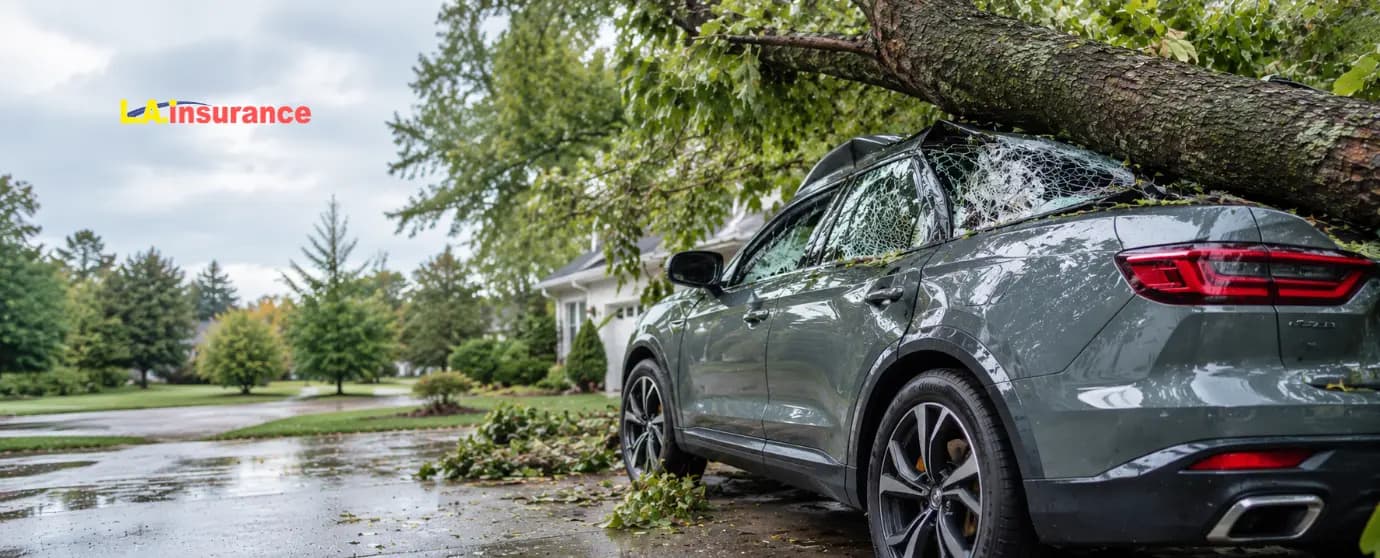
Does Insurance Cover a Tree Falling on Your Car?
Whether your car is parked out in the open under or near a tree, or you’re driving when a tree suddenly falls on your car, either way, it can leave your car severely damaged or even wrecked.