Publish Date: 28-03-2026
Auto Insurance
Last Updated: 19-05-2026
What Is Towing and Labor Coverage?
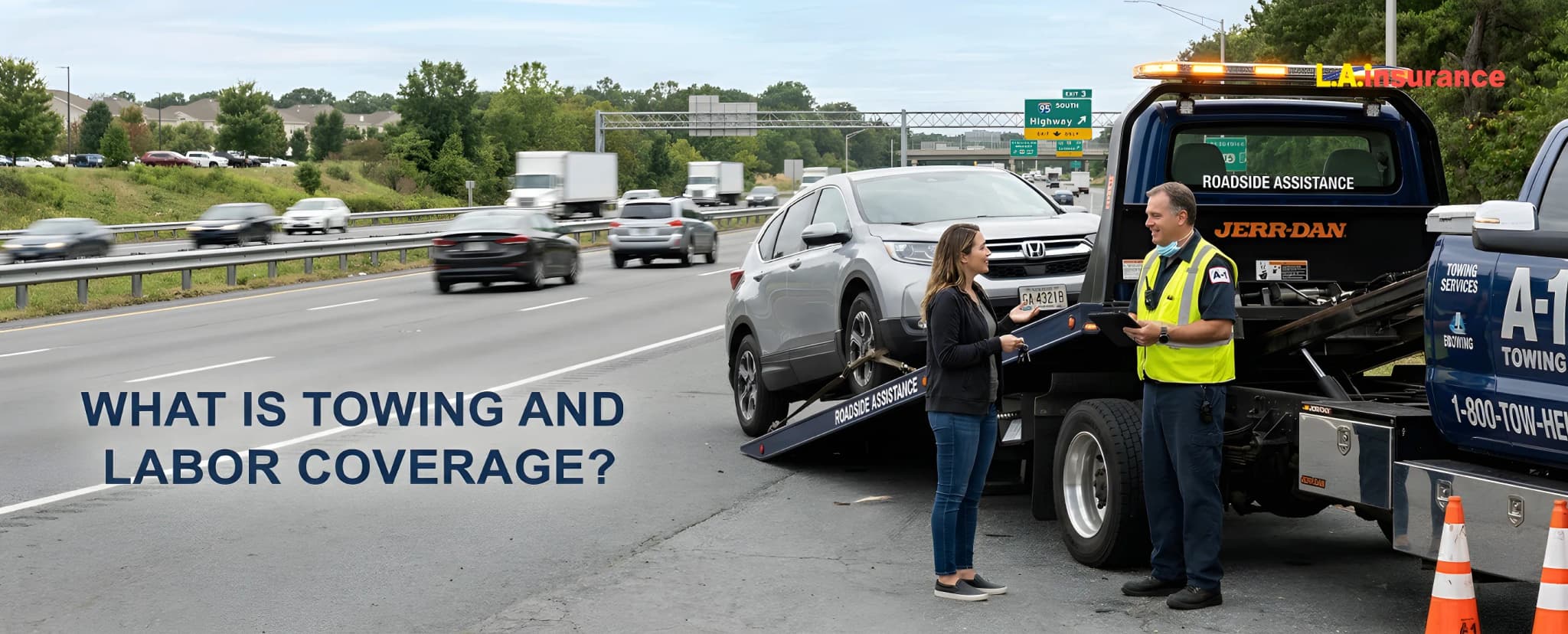
Towing and labor coverage is a small add-on to your auto insurance policy. However, it can make a big difference when your vehicle breaks down. In simple terms, it helps pay for towing and basic roadside labor when you are stranded.
You can think of it as a low-cost protection for an emergency situation. If you get a flat tire, a dead battery, or need a tow truck, this coverage helps cover the service, not the parts. As a result, you avoid sudden out-of-pocket expenses during a roadside emergency.
Most insurance companies offer this as an optional endorsement. So, you can add it to your auto policy for just a few dollars per month. That said, availability is usually flexible across providers.
However, eligibility can vary. Some insurers require physical damage coverage, like collision or comprehensive before adding it. On the other hand, some allow it with liability insurance only, so you may not need full coverage car insurance at all.
What’s Actually Covered by Towing and Labor Coverage?
Towing and labor coverage provides on basic roadside help when your vehicle can’t move. It covers the service, not the parts replacement costs. So, you get quick help without a large out-of-pocket expense.
Here’s what most auto insurance policies typically include:
- Towing service: Your car is taken to a nearby repair shop after a breakdown.
- Winching service: A tow truck uses a cable to pull your vehicle back onto the road when it’s stuck in mud, snow, or a ditch.
- Flat tire change: A technician installs your spare tire on the spot.
- Jump-start: Help for a dead battery so you can get back on the road.
- Lockout service: Assistance if you’re locked out of your vehicle.
- Fuel delivery: Emergency gas delivery if you run out (you may pay for the fuel).
However, coverage limits apply. Most insurance companies cap how much they pay per service call or towing distance.
As a result, this type of car insurance coverage add-on works best for small roadside emergencies, not major repairs.
Common Exclusions: What’s Not Covered?
Towing and labor coverage can be really useful, however, it does have limits. In most cases, it only pays for the labor costs, not the actual parts. So, if you need a new tire or fuel, you still cover that cost yourself.
For example, a fuel delivery service may be included. However, the price of the gas is not. The same goes for replacing a damaged tire or battery.
In addition, this coverage usually does not apply after a serious accident. Instead, those situations fall under physical damage coverage like collision or comprehensive in your auto insurance policy.
So, towing coverage works best for minor roadside issues not major repairs or accident-related damage.
The "Home" Restriction: Where Coverage Might Fail
Here’s something many drivers don’t expect. Towing and labor cost coverage may not apply if your vehicle breaks down at home. This is often called the “driveway exclusion.”
In many auto insurance policies, service is only covered once you’re away from your residence. For example, if your car won’t start in your driveway or within a short distance like 100 feet, your insurance company may deny the claim.
Because of this, you could still face out-of-pocket costs for a tow truck or roadside labor at home. However, rules vary by provider, so always check your policy details.
How Does the Reimbursement Process Work?
When you use towing and labor insurance coverage, there are usually two ways the payment works. It depends on your insurance company and how the service is arranged.
1. Direct Dispatch
In this case, your insurer sends a tow truck or roadside provider to you. Then, they pay the service directly. So, you don’t have to deal with upfront out-of-pocket costs.
2. Reimbursement
Here, you pay for the towing or roadside service first. After that, you file a claim with your auto insurance and submit the receipt for reimbursement.
However, reimbursement is more common with smaller or local carriers. That means you may need to keep documentation and follow the claim process carefully.
As a result, it’s smart to check your auto policy ahead of time. That way, you know exactly what to expect during a roadside emergency.
Towing and Labor vs. Roadside Assistance: What’s the Difference?
Towing and Labor coverage and roadside assistance are very related when it comes to usefulness and what they cover. However, they aren’t the same thing. The key difference comes down to how the service is provided and paid for.
Towing and labor coverage is part of your auto insurance policy. So, it works as an add-on, and you may need to file a claim or request service through your insurance company.
On the other hand, roadside assistance is usually a membership service. Think AAA-style programs that you pay for yearly, regardless of your auto insurance.
Here’s a simple breakdown:
Feature | Towing & Labor Coverage | Roadside Assistance |
Type | Insurance add-on | Membership service |
Cost | $2 to $10/month added to premium | $60 to $120/year |
Payment | Reimbursement or direct dispatch | Usually direct service |
Coverage Limits | Per claim or service cap (e.g., $75 per tow, limited miles) | Based on plan tier (Basic vs. premium memberships often have higher limits) |
Flexibility | Tied to your vehicle insurance | Follows you/driver, not just your car |
Do You Need Towing and Labor Coverage
Whether you need towing and labor coverage depends on your driving habits and risk level. In many cases, insurers require physical damage coverage like collision auto insurance or comprehensive insurance before you can add it. However, some insurance companies let you add it to a basic liability insurance policy.
So, when does it make sense to add it? Here are common situations where this coverage is worth it:
- You drive an older or high-mileage vehicle
- You have a long daily commute or travel often
- You don’t already have roadside assistance
- You want to avoid sudden out-of-pocket costs
In addition, this add-on is very affordable. For just a small increase in your auto insurance premium, you get extra protection during a roadside emergency.
As a rule, if you rely on your car daily, this coverage is usually worth adding.
Need affordable full coverage auto insurance? Contact L.A. Insurance today for reliable coverage and guidance.
What Happens If You Don’t Have Towing and Labor Coverage?
If you don’t have towing and labor coverage, you pay everything out of pocket. That includes the tow truck, roadside service, and any emergency help your vehicle needs. As a result, even a small breakdown can turn expensive fast.
According to insurance comparison site The Zebra, the average cost per mile for towing is $4.75, and the cost of towing a car is $109. However, longer distances or after-hours service can push that even higher. So, one roadside emergency can easily cost more than a full year of this coverage.
Because of this, many drivers see the value quickly. Paying a few dollars added to your auto insurance premium can help you avoid large, unexpected out-of-pocket costs later.
Learn more: Does full coverage car insurance cover towing?
How Much Does Towing and Labor Coverage Cost
The good news is that towing and labor coverage is one of the cheapest add-ons you can get. In most cases, it costs between $2 and $10 per month on top of your auto insurance premium. That’s why many drivers see it as easy, low-cost protection.
However, your exact cost can vary. Insurance companies look at factors like your location, vehicle, and coverage limits. In addition, higher limits or frequent claims may slightly increase your price.
Here’s what typically affects your cost:
- Your insurer and auto policy details
- Your state (rates vary in Michigan and nationwide)
- Coverage limits for towing and roadside service
- Your driving history and overall risk
As a result, for just a few dollars a month, you can avoid large out-of-pocket expenses. One tow truck bill alone often costs more than a full year of this coverage.
How Do I Use My Towing and Labor Coverage?
Using your towing and labor coverage is quite easy. First, check your auto insurance policy or mobile app to confirm your coverage and limits. That way, you know what’s included before a roadside emergency happens.
Next, call your insurance provider or the designated service number. Many providers offer direct dispatch, so a tow truck comes to you without upfront payment. If your carrier uses reimbursement, pay the service and keep the receipt for filing a claim later.
Here’s a practical checklist:
- Keep your insurance card handy in your vehicle.
- Know your coverage limits for towing distance and service types.
- Save receipts if reimbursement is needed.
- Confirm the dispatch process, especially for after-hours roadside assistance.
By following these steps, you can get quick help while minimizing risk and unexpected costs.
The Bottom Line
Towing and labor coverage is a small, affordable add-on with a big payoff. For just a few dollars a month, you can avoid sudden out-of-pocket expenses during a roadside emergency. It covers labor for tows, flat tires, jump-starts, lockouts, and more, though not the cost of parts. While not required, it’s especially useful for older vehicles, long commutes, or drivers without existing roadside assistance. In Michigan and across the U.S., a single tow can easily cost over $100, making this coverage a smart, low-risk investment for peace of mind on every drive.
Towing and Labor Coverage FAQs
Do I need towing and labor coverage if I have roadside assistance?
It depends. Roadside assistance covers most basic emergencies, but towing and labor coverage is tied to your auto insurance, may include different limits, and avoids extra membership costs.
How much does a tow cost?
A standard tow typically ranges from $75 to $200. After-hours, longer distances, or heavy vehicles can increase the cost significantly.
Do I need to tell my insurance if I am towing?
Yes. Always notify your insurer when you use towing services through your auto policy. This ensures coverage and avoids denied claims.
Is towing free with full coverage insurance?
Not automatically. Full coverage (collision/comprehensive) may cover accident-related towing, but routine breakdowns often require the towing and labor add-on.
Can I use my towing and labor coverage to tow someone else’s car?
No. Coverage typically applies only to your insured vehicle, not other drivers’ cars. Some insurers may offer exceptions. So, verify your policy first.
Editorial Disclaimer
The information provided on this blog is for general informational purposes only and does not constitute professional insurance, legal, or financial advice. Coverage and rates are subject to individual eligibility, underwriting guidelines, and state availability. For specific questions regarding your policy or to get an accurate quote, please contact a licensed L.A. Insurance agent directly. We're an independent agency and not a direct insurance carrier. For more information on how we operate and handle your data, please see our Terms and Conditions and Privacy Policy.
Tag :
best auto insurance
cheap car insurance
fast car insurance

What is Term Life Insurance?
Term life insurance is a type of life insurance policy that provides coverage for a specific period, generally 10, 15, 20, 30, or even 40 years.

Types of Life Insurance and How They Differ?
If you’re shopping for life insurance, you’ve probably come across different types of life insurance, such as term life insurance, whole life insurance, and universal life insurance.

What Is Life Insurance?
If you’re thinking about getting a life insurance policy, it’s important to understand what it is and how it works. Simply put, life insurance is a type of financial protection that provides money to your chosen beneficiaries after your death.

Does Car Insurance Cover Rust Damage?
Rust can damage many parts of your car and may become more severe over time if left untreated.
Does Insurance Cover a Tree Falling on Your Car?
Whether your car is parked out in the open under or near a tree, or you’re driving when a tree suddenly falls on your car, either way, it can leave your car severely damaged or even wrecked.
Does Car Insurance Cover Snow Damage?
Your car is more susceptible to damage in winter when it snows. As long as it’s out in the open, it can get damaged by snow at any moment.