Publish Date: 30-03-2026
Auto Insurance
Last Updated: 19-05-2026
Difference Between At-Fault and No-Fault Accidents
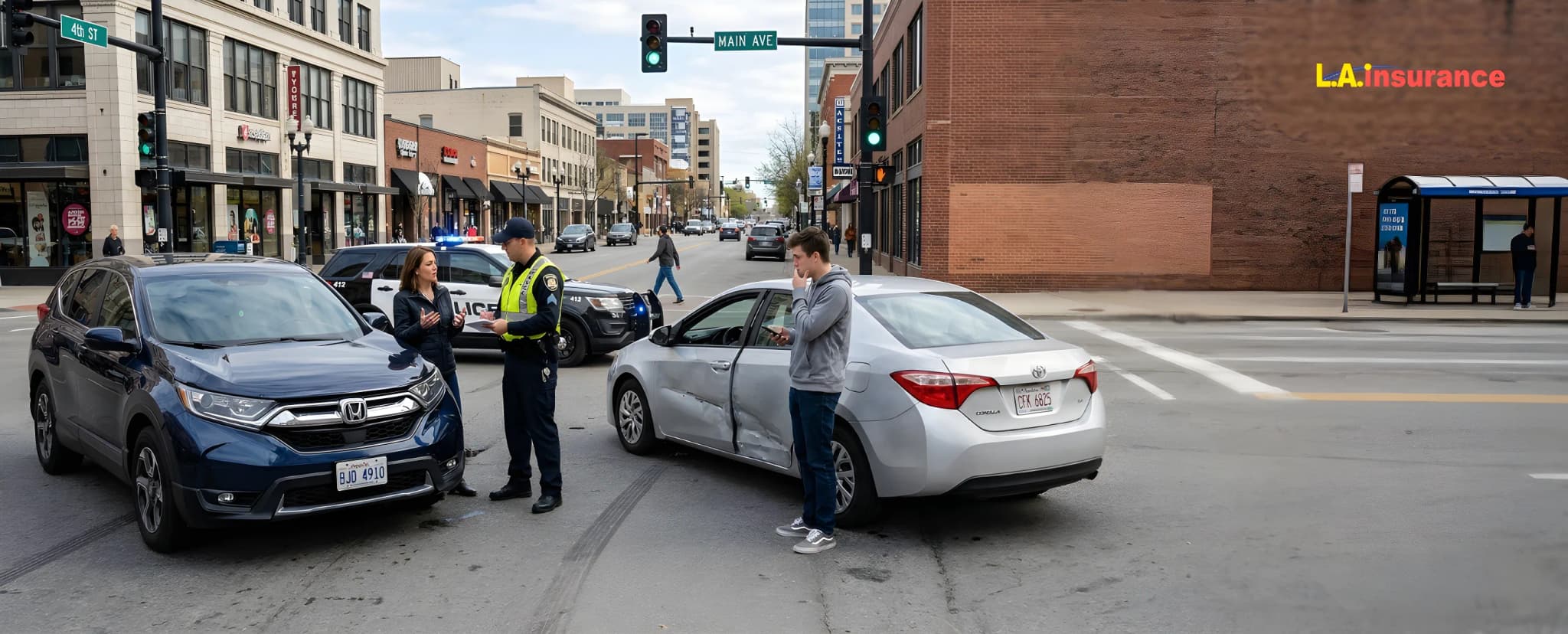
The first question that comes up after a car accident is who pays for the damages? However, the answer depends on your state’s insurance system.
In simple terms, there are two systems: at-fault and no-fault. One focuses on who caused the accident, while the other focuses on how your insurance policy pays for your injury and losses.
So, here’s the key takeaway. It’s not just about fault, it’s about how you get paid. Depending on where you live, your insurance company may cover your costs first, or you may need to file a claim against the other driver.
What is an At-Fault Accident? (The Tort System)
An at-fault accident follows the traditional tort system. Here, the driver who caused the accident is legally responsible for the damages, including bodily injury and property damage.
So, you must prove fault before you get paid. This usually involves showing negligence, meaning the other driver failed their duty of care on the road.
Because of that, the claims process can take longer. Your insurance company or lawyer may gather evidence, review a police report, and speak with a witness to support your case.
If the other driver is clearly at fault, their liability insurance pays for your losses. However, if there’s a dispute, the case may lead to a settlement or even a lawsuit for personal injury and pain and suffering.
What is a No-Fault Accident? (The PIP System)
A no-fault accident works differently. Here, your own insurance policy pays for your injury costs, no matter who caused the accident.
So, instead of proving fault, you file a claim with your insurance company first. This coverage is called personal injury protection (PIP), and it helps pay for medical bills, lost income, and basic expenses.
However, there’s a trade-off. In most no-fault states, your right to file a lawsuit is limited, even if the other driver was careless.
Still, there’s an exception. If your injuries meet a serious threshold, you may step outside the no-fault system and pursue a personal injury claim for additional damages, including pain and suffering.
The "Serious Injury" Threshold: When You Can Still Sue
No-fault rules are strict, but they are not absolute. In fact, most states allow a lawsuit if your injury meets a “serious injury” threshold.
So, what counts as serious? It usually includes permanent damage, significant disfigurement, or injuries that affect your daily life for a long time.
Because of this threshold, you can step outside PIP limits. Then, you may file a personal injury claim against the at-fault driver for additional damages, including pain and suffering.
However, proving this is not simple. You often need medical records, expert opinions, and strong evidence to show how severe your injuries really are.
Key Differences: At-Fault vs. No-Fault Insurance
At first glance, both systems handle a car accident the same way. However, the real difference shows up in how your insurance pays and who you deal with after the crash.
In an at-fault system, you usually pursue the other driver’s insurance company. But in a no-fault system, you start with your own insurance policy, regardless of fault.
Here’s a simple breakdown you can use:
Category | At-Fault System | No-Fault System |
Who pays for injury | At-fault driver’s liability insurance | Your own PIP coverage |
Who pays for property damage | At-fault driver’s insurer | Usually the at-fault driver (via 'Mini-Tort') |
Need to prove fault? | Yes, to recover damages | No, for basic injury claims |
Right to file a lawsuit | Broad rights to sue | Limited unless serious injuries |
Claims process | Longer, involves evidence and disputes | Faster, handled by your insurer |
How Claims Work in At-Fault vs. No-Fault Accidents
After a car accident, the claims process depends on your state’s system. So, the steps you take can look very different.
In an at-fault system, you typically file a claim against the other driver’s insurance company. Then, they investigate fault, review evidence, and decide who pays for your damages.
However, this can take time. If there’s a dispute, you may need a lawyer, and the case could lead to a settlement or even a lawsuit.
In a no-fault system, things move faster. You file a claim with your own insurance policy under PIP, and it covers your injury costs right away.
Still, property claims often follow fault rules. So, for property damage, you may still deal with the other driver’s insurer.
Pros and Cons of At-Fault vs. No-Fault Systems
Both systems have clear benefits. However, each comes with trade-offs that can affect your claims process, costs, and legal options.
At-Fault System
Pros:
- You can pursue full damages, including pain and suffering
- More flexibility to file a lawsuit for personal injury
- The at-fault driver’s liability insurance pays when fault is proven
Cons:
- Claims can take longer due to evidence and disputes
- You must prove negligence and causation
- Legal costs may increase if a lawyer is involved
No-Fault System
Pros:
- Faster access to injury benefits through PIP
- Less need to prove fault, so claims move quickly
- Reduced legal conflict in minor accidents
Cons:
- Limited ability to file a lawsuit
- Benefits may not cover all damages
- Higher premiums in some states, including Michigan
So, what does this mean for you? If you want compensation faster, no-fault helps. But if you want full recovery, the at-fault system offers more legal options.
Property Damage vs. Bodily Injury: The Rules Change
After a car accident, not all claims follow the same rules. In fact, injury and property damage are handled very differently, especially in no-fault states.
For bodily injury, your own insurance policy usually pays first through PIP. So, you don’t need to prove fault to get medical care or lost wage benefits.
However, property damage works differently. In most cases, the at-fault driver’s liability insurance is still responsible for vehicle repairs and other damages.
That’s where things can get confusing. Even in a no-fault system, fault still matters when it comes to your car, not your injuries.
Understanding Mini-Tort and Vehicle Damage
In states like Michigan, there’s an extra rule called mini-tort. It helps you recover some out-of-pocket property damage costs after a crash.
So, if your car is damaged, you may file a small claim against the at-fault driver. This can help cover your deductible or repair gap that your insurance company didn’t pay.
However, there’s a limit. Mini-tort claims are capped by law, so you won’t recover full damages in most cases.
Still, it’s a useful option. Especially when your repair costs go beyond what your own insurance covers.
Learn more: What is property protection insurance in Michigan?
Shared Fault: Comparative vs. Contributory Negligence
If both parties are at fault, who is to blame?
Not every car accident has a clear winner. Sometimes, both drivers share fault, and that’s where negligence rules decide what happens next.
So, your ability to recover damages depends on your state’s law. Some states follow comparative negligence, while a few still use contributory negligence.
Comparative Negligence (Most States)
This system is more flexible. Your damages are reduced based on your share of fault.
- If you are 25% at fault, you recover 75% of your losses
- Some states limit recovery if you are over 50% or 51% at fault
So, you can still recover money, even if you made a mistake. That’s why this system is seen as more fair.
Contributory Negligence (Few States)
This rule is strict. If you are even 1% at fault, you may recover nothing.
Because of that, even minor negligence can block your claim. This can feel harsh, especially in real-world accidents.
To sum up, comparative negligence allows partial recovery, while contributory negligence can bar recovery entirely.
Which Laws Apply to You? No-Fault vs. At-Fault States
Your rights after a car accident depend on where you live. Each state follows its own law, so the rules for insurance and claims can change quickly.
Most states use an at-fault system. However, a smaller group follows no-fault rules, where your insurance policy pays first for injury through PIP.
No-Fault States (PIP Required)
These states follow no-fault insurance laws, as per the Insurance Information Institute (III):
- Michigan
- Florida
- Kansas
- New York
- New Jersey (choice no-fault)
- Pennsylvania* (choice no-fault)
- Kentucky* (choice no-fault)
- Massachusetts
- Minnesota
- Utah
- Hawaii
- North Dakota
So, in these states, you typically file with your own insurance company first.
At-Fault States (Most of the U.S.)
Most other states follow the at-fault system. Here, the driver with fault is responsible for damages, and their liability insurance pays.
Because of that, you may need to prove negligence and go through a longer claims process.
So, what does this mean for you? If you live in Michigan, no-fault rules apply. However, your ability to file a lawsuit still depends on your injuries and the situation. Learn Michigan auto insurance requirements.
How an Accident Affects Your 2026 Insurance Rates
After a car accident, your insurance rates may change. However, how much they increase depends on the fault, your claims history, and your insurance company.
If you are at fault, your premium will likely go up. That’s because insurers see a higher risk after a paid claim for damages or injury.
But what if you are not at fault? In many cases, your rates may still increase, though usually less. Some insurers also offer accident forgiveness, which can protect your first claim from a rate hike.
In no-fault states like Michigan, things work differently. Since your insurance policy pays through PIP, even small claims can impact your record.
So, what can you do? Drive safely, avoid repeat accidents, and review your coverage often. Over time, a clean record helps lower your insurance costs again.
Learn more: Does no-fault accident affect insurance in the future?
Common FAQs related to no-fault and at-fault insurance
Can I sue in a no-fault state?
Yes, but only in certain cases. You can file a lawsuit if your injuries meet the serious threshold. This usually includes severe or long-term harm, beyond basic PIP coverage.
Who pays for my car repairs?
It depends on fault. In most cases, the at-fault driver’s liability insurance pays for property damage. However, your own insurance policy may cover repairs first if you have collision coverage.
Does my premium go up if I’m not at fault?
Sometimes, yes. Even if you’re not at fault, your insurance company may raise rates after a claim. However, increases are usually smaller, and accident forgiveness may apply.
Editorial Disclaimer
The information provided on this blog is for general informational purposes only and does not constitute professional insurance, legal, or financial advice. Coverage and rates are subject to individual eligibility, underwriting guidelines, and state availability. For specific questions regarding your policy or to get an accurate quote, please contact a licensed L.A. Insurance agent directly. We're an independent agency and not a direct insurance carrier. For more information on how we operate and handle your data, please see our Terms and Conditions and Privacy Policy.
Tag :
Comercial Auto
Auto insurance
fast car insurance
cheap car insurance
car maintenance

What is Term Life Insurance?
Term life insurance is a type of life insurance policy that provides coverage for a specific period, generally 10, 15, 20, 30, or even 40 years.

Types of Life Insurance and How They Differ?
If you’re shopping for life insurance, you’ve probably come across different types of life insurance, such as term life insurance, whole life insurance, and universal life insurance.

What Is Life Insurance?
If you’re thinking about getting a life insurance policy, it’s important to understand what it is and how it works. Simply put, life insurance is a type of financial protection that provides money to your chosen beneficiaries after your death.

Does Car Insurance Cover Rust Damage?
Rust can damage many parts of your car and may become more severe over time if left untreated.

Does Insurance Cover a Tree Falling on Your Car?
Whether your car is parked out in the open under or near a tree, or you’re driving when a tree suddenly falls on your car, either way, it can leave your car severely damaged or even wrecked.
Does Car Insurance Cover Snow Damage?
Your car is more susceptible to damage in winter when it snows. As long as it’s out in the open, it can get damaged by snow at any moment.