Publish Date: 11-04-2026
Auto Insurance
Last Updated: 17-08-2026
Does Car Insurance Cover Animal Damage?
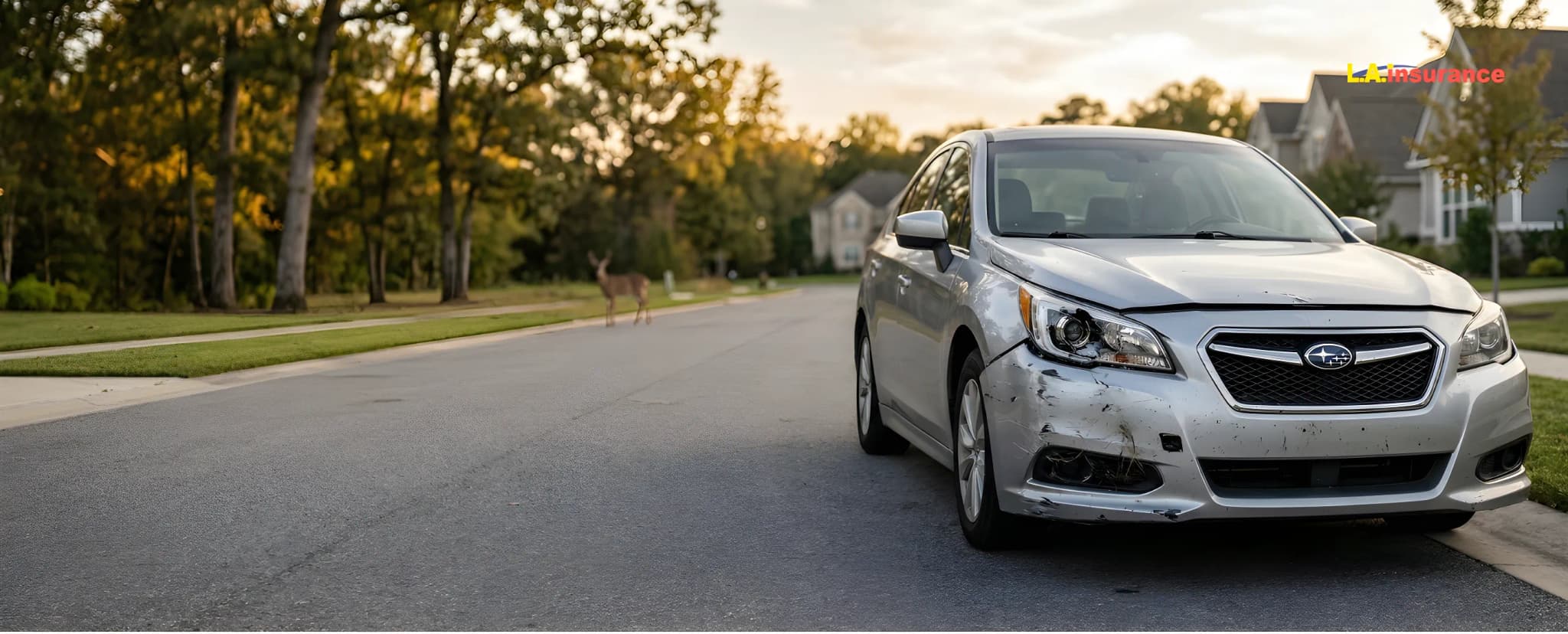
Animal collisions are more common than most drivers think. In fact, according to the Federal Highway Administration (FHWA), there are between 1 and 2 million wildlife-vehicle crashes every year in the U.S. Deer alone account for a large share of these accidents. Estimates show over 1.6 million deer-vehicle collisions annually, causing billions of dollars in damage and thousands of injuries.
That’s why we’re not surprised when someone asks whether car insurance covers animal-related damage. The answer is yes. Car insurance does cover animal damage, but only if you have comprehensive coverage.
Unfortunately, comprehensive coverage isn’t a mandatory auto policy. Most drivers who carry only the state-mandated minimum liability, PIP, or even collision insurance won’t be covered for animal damage. However, these other coverages may apply differently in such situations, which we’ll also discuss in this article.
What Type of Car Insurance Covers Animal Damage?
Each type of coverage applies differently when it comes to animal damage. For example, comprehensive coverage pays for damage to your vehicle caused by hitting an animal. However, it doesn’t cover medical bills for you or your passengers if you’re injured. If you’re hurt in a wildlife-vehicle collision (WVC), you would need to rely on your Personal Injury Protection (PIP) or Medical Payments Coverage (MedPay). Let’s break down how each coverage can help if you encounter an animal-vehicle collision.
Comprehensive Car Insurance
Comprehensive car insurance is the primary coverage for animal damage.
It protects your vehicle from events that are outside your control. This includes collisions with animals and damage caused by wildlife.
For example, your insurance policy may cover:
- Hitting a deer or other large animal
- Rodents chewing wires under the hood
- Animals nesting inside your car
- Broken glass or exterior damage caused by animals
In most cases, you will need to pay a deductible before your insurance company covers the remaining repair costs.
Temporary Transportation Coverage
Temporary transportation coverage, also known as rental reimbursement, does not pay for the damage itself caused by any type of collision, including an animal.
However, it can help cover the cost of a rental car while your vehicle is being repaired after a covered comprehensive claim. This coverage is optional. Not all auto insurance policies include it by default.
Medical Payment Coverage and PIP
Medical payments coverage (MedPay) and personal injury protection (PIP) focus on injuries regardless of fault, not vehicle damage.
If you are hurt during an animal-related accident, these coverages may help pay for:
- Medical bills
- Hospital visits
- Lost wages (in some cases, with PIP)
They apply regardless of fault, depending on your insurance policy and state laws.
Collision Auto Insurance
Collision insurance does not usually cover damage caused directly by animals.
This coverage applies when your car hits another vehicle or a fixed object.
There is one important exception.
If you swerve to avoid an animal and crash into something else, your collision coverage may pay for the damage.
In short, if you hit an animal directly, comprehensive insurance applies. But if you swerve and crash, collision insurance will take care of the repair bills for your vehicle.
Liability Insurance
Liability auto insurance does not cover damage to your own car. It only pays for bodily injuries or property damage you cause to others. So, if an animal damages your vehicle, this coverage will not help.
However, there’s a catch. If the animal has an owner, the situation can change. For example, if a loose dog or livestock causes an accident, the owner may be responsible. Their liability insurance could potentially cover your damages.
Examples of Animal Damage Covered by Auto Insurance
Animal damage can happen in many ways. It’s not always a direct collision. In some cases, the damage happens while your car is parked or sitting unused.
If you carry comprehensive coverage, your insurance policy may cover a wide range of animal-related incidents. Below are some of the most common examples drivers face.
Hitting a Deer, Moose, or Other Wildlife
This is the most common type of animal-related accident.
If you hit a deer, moose, or another wild animal, comprehensive insurance typically covers the damage to your vehicle. These accidents often cause significant front-end damage, broken headlights, or even airbag deployment.
However, if you swerve to avoid the animal and crash into another object, your collision coverage may apply instead.
Learn more about how auto insurance help hitting a deer:
Does liability insurance cover hitting a deer?
Is hitting a deer a comprehensive or collision?
Damage from Rodents Chewing Wires or Nesting
Rodent damage is more common than many drivers realize. In fact, according to the Independent Agent Magazine, it’s estimated that rodent-related damage cause $200 million in repairs annually.
Mice, rats, and squirrels can chew through electrical wiring, insulation, and hoses under the hood. Some animals may even build nests inside your engine bay or air system.
If this type of damage occurs, comprehensive coverage usually pays for repairs, since it is considered a non-collision event.
Scratches, Dents, or Broken Glass from Stray Animals
Animal damage doesn’t necessarily have to involve a crash.
Stray animals like cats and dogs can scratch your car’s paint, dent body panels, or break mirrors and windows. This often happens when a vehicle is parked outdoors.
In these situations, comprehensive insurance may cover the repair costs, depending on your policy and deductible.
Damage Caused by Pets or Livestock (Who Pays?)
When a domestic animal is involved, the situation can be different.
If you hit a dog, cow, or other livestock, your comprehensive coverage may still cover the damage to your vehicle. However, the animal’s owner could also be responsible if they failed to control or secure the animal.
In that case, the owner’s liability insurance may help cover your damages. The outcome often depends on local laws and whether negligence is involved.
Damage from Bears, Raccoons, and Other Wildlife
Some animals can cause serious damage without a collision.
Bears, raccoons, and similar wildlife may break into vehicles, tear through interiors, or damage doors and windows while searching for food.
These incidents are also typically covered under comprehensive insurance, since they are considered unexpected, non-collision events.
When Does Car Insurance Not Cover Animal Damage?
So, as we just mentioned, car insurance does cover many types of animal damage. But there are situations where your insurance policy will not pay for repairs. If you know these limits, you can help yourself avoid unexpected costs.
You Don’t Have Comprehensive Coverage
This is the most common reason a claim gets denied. If you only carry liability insurance or even collision coverage, damage caused by animals is usually not covered. Without comprehensive coverage, you will have to pay for repairs out of pocket.
You Only Have Liability Coverage
Liability insurance is required in most states, but it does not protect your own vehicle. It only pays for injuries or damage you cause to others. So, if you hit an animal or an animal damages your car, this coverage will not apply.
The Damage Falls Under Collision Instead
Not every animal-related accident is treated the same way. If you swerve to avoid an animal and crash into another car or object, your claim may fall under collision insurance, not comprehensive. If you don’t carry collision coverage, the damage may not be covered at all.
The Cost Is Below Your Deductible
Even with comprehensive coverage, you are responsible for your deductible. If the repair cost is less than or close to your deductible, your insurance company will not issue a payout. In that case, it may not make sense to file a claim.
The Damage Is Considered Preventable or Negligent
Insurance is designed to cover sudden and accidental damage. If the insurance company believes the damage could have been prevented, your claim may be denied. For example, repeated rodent damage due to lack of maintenance or leaving a vehicle unused for long periods may raise questions.
You Waited Too Long to File the Claim
Timing matters after an animal-related accident. If you wait too long to report the damage, your insurance company may deny the claim or reduce the payout. Most insurance policies require prompt reporting, typically within 24 to 72 hours, and proper documentation.
Now, before filing a claim for animal damage, keep in mind a few key factors: you may need to pay a deductible, your insurance rates could rise, and you might be required to report the incident to the police. We’ll break down each of these below.
Does Insurance Cover Animal Damage Without a Deductible?
In most cases, no. Car insurance does cover animal damage, but you will still need to pay your deductible before your insurance company pays the rest.
An auto deductible is the amount you agree to pay out of pocket on a comprehensive claim. Common deductibles range from $250 to $1,000. For example, if animal damage repairs cost $2,000 and your deductible is $500, your insurer would cover the remaining $1,500.
The only time animal damage is covered without a deductible is when your deductible is set to $0. Some drivers choose this option, but it usually comes with a higher insurance premium.
Because of this, it’s important to compare your repair costs with your deductible before filing a claim. If the damage is minor, you may end up paying the full cost yourself anyway.
Will an Animal Damage Claim Raise Your Rates?
In many cases, an animal damage claim has little to no impact on your car insurance rates.
That’s because these claims fall under comprehensive coverage, which is considered a non-fault or low-risk event. You did not cause the animal to enter the road, so insurers generally treat it differently from at-fault accidents.
However, a small increase is still possible depending on your insurance company, claims history, and location. According to industry data from The Zebra, drivers see an average increase of about $51 per year after one comprehensive claim, and around $86 per year after two claims.
Even with these increases, comprehensive claims are usually less expensive than collision claims in the long run. Still, filing multiple claims in a short period can raise your overall risk profile.
Learn more: Does a no-fault accident affect insurance in the future?
Do I Have to Report an Animal Collision to the Police?
Well, it depends on the type of animal, the location of the accident, and the severity of the damage. In most cases, you are not required to report an animal collision to the police.
If you hit a wild animal and there are no injuries or major hazards, you can usually move your vehicle to a safe location and handle the situation through your insurance company.
However, there are situations where reporting is necessary.
You should contact the police if:
- Someone is injured
- Your car is not drivable or is blocking the road
- The accident creates a safety hazard for other drivers
- You hit a large animal, like a deer or moose, that remains on the roadway
Some states also require you to report accidents that exceed a certain damage amount. In these cases, filing a police report helps document the incident for your insurance claim.
If the animal is domestic, such as a dog or livestock, reporting becomes more important. The police can help identify the owner, which may affect liability insurance and who is responsible for the damages.
Even when it’s not legally required, having a police report can still be helpful. It provides official documentation, which can make the claims process smoother and reduce disputes with your insurance company.
How to File a Claim for Animal-Related Damages?
Filing a claim after an animal-related incident isn’t so difficult. However, to make the process smooth, you should act as quickly as possible.
First, start by contacting your insurance company as soon as possible. Most insurers let you file a claim online, through a mobile app, or by phone.
Be ready to provide:
- The date, time, and location of the incident
- A description of what happened
- Photos of the damage to your vehicle
- A police report, if one was filed
After you submit the claim, your insurance adjuster will review the damage. They may inspect your car in person or ask for additional photos. Once the claim is approved, your insurer will estimate the repair cost and apply your deductible.
If you have comprehensive coverage, it will typically cover the damage after the deductible is paid. You can then move forward with repairs at an approved shop or one of your choice, depending on your policy.
What to Do If Your Car Is Damaged by an Animal?
An animal-related accident can be stressful. Knowing what to do next can help protect your safety and your insurance coverage.
First, move your vehicle to a safe location if possible. Turn on your hazard lights and stay alert to traffic around you.
Next, check for injuries. If you or your passengers are hurt, call emergency services right away.
If it’s safe to do so, document the scene:
- Take clear photos of your car and any visible damage
- Note the location and road conditions
- Avoid approaching the animal, especially if it is injured
In some cases, you may need to call the police, especially if the accident caused injuries or blocked the road.
Finally, contact your insurance company to report the incident and start the claims process. Acting quickly helps prevent delays and ensures your claim is properly documented.
Learn more: What to do if you hit a deer?
How to Prevent Animal Damage to Your Vehicle
Animal damage is not only common but also more costly than many drivers imagine. A 2024 research article found that wildlife-vehicle collisions in the U.S. increased by 50% between 1990 and 2004, leading to about 200 deaths, 26,000 injuries, and more than $8 billion in annual costs.
According to Federal Highway Administration (FHWA) data, the average animal-vehicle collision costs around $6,126. Most incidents (about 95%) involve property damage only, with an average cost of $2,570. However, crashes involving serious injuries or fatalities can push costs into the hundreds of thousands, or even millions. And that’s why you should try to keep yourself and your vehicle safe from all sorts of animal damage.
While you can’t eliminate the risk entirely, there are steps you can take to reduce it.
- Drive more cautiously in high-risk areas. Animal collisions are more likely on rural roads, near forests, and during dawn or dusk when animals are most active.
- Watch for warning signs. Road signs that indicate deer or wildlife crossings are placed in areas with higher accident rates. Slowing down in these zones can give you more time to react.
- Use your high beams when possible. At night, high beams can help you spot animals earlier. Just remember to dim them when other vehicles are approaching.
- Avoid swerving suddenly. If an animal appears in front of you, braking firmly is usually safer than swerving. Swerving can lead to more serious accidents involving other vehicles or objects.
- Keep your vehicle clean and maintained. Food, trash, or long periods of inactivity can attract rodents. Regular use and maintenance can reduce the risk of animals nesting under the hood.
- Park in enclosed or well-lit areas. Whenever possible, park in a garage or a secure location. This can help prevent damage from stray animals or wildlife.
Does Auto Insurance Cover Animal Damage: The Bottom Line
Car insurance can cover animal damage, but only if you have the right coverage. In most cases, comprehensive car insurance is what protects your vehicle from collisions with animals or damage caused by wildlife.
Other coverages, like collision, liability, or PIP, may apply in specific situations, but they don’t replace comprehensive coverage.
You’ll also need to consider your deductible, possible out-of-pocket costs, and whether filing a claim makes financial sense.
In short, animal damage is often unpredictable. And the best way to stay protected is to carry comprehensive coverage and understand how your insurance policy works before an accident happens.
FAQs Related to Animal Collision and Car Insurance
Does insurance cover hitting a deer?
Yes. If you have comprehensive coverage, your car insurance policy typically covers damage to your vehicle after hitting a deer. You will still need to pay your deductible before your insurer pays the remaining costs.
Is hitting an animal considered an accident?
Yes. Hitting an animal is considered an accident, but it is usually treated as a non-fault incident under comprehensive coverage. This means it often has less impact on your insurance rates than at-fault collisions.
What happens if I accidentally hit someone’s pet?
If you hit a pet, your comprehensive coverage may cover damage to your vehicle. However, the pet owner could also file a claim against your liability insurance for the animal’s injury or value, depending on local laws and fault.
Will comprehensive coverage cover your personal belongings damaged by animal collisions?
No. Comprehensive car insurance covers damage to your vehicle, not personal items inside it. If your belongings are damaged, you may need to file a claim under your home insurance or renters insurance instead.
Will roadside assistance help if my car breaks down following a wildlife collision?
Yes, if you have roadside assistance as part of your auto insurance policy. It can help with towing, battery issues, or getting your vehicle to a repair shop after the accident. However, it does not cover the repair costs.
Does car insurance cover hitting a dog?
Yes, in most cases. Hitting a dog is usually covered under comprehensive coverage, just like other animal collisions. If the dog has an owner, their liability insurance may also play a role depending on the situation.
Does auto insurance help if my vehicle is totaled after a collision with an animal?
Yes. If your vehicle is totaled, comprehensive coverage will typically pay its actual cash value (ACV), minus your deductible. If you have an auto loan, gap coverage can help pay the remaining balance if you owe more than the car’s value.
Editorial Disclaimer
The information provided on this blog is for general informational purposes only and does not constitute professional insurance, legal, or financial advice. Coverage and rates are subject to individual eligibility, underwriting guidelines, and state availability. For specific questions regarding your policy or to get an accurate quote, please contact a licensed L.A. Insurance agent directly. We're an independent agency and not a direct insurance carrier. For more information on how we operate and handle your data, please see our Terms and Conditions and Privacy Policy.
Tag :
Auto insurance
fast car insurance
car maintenance
cheap car insurance

Types of Life Insurance and How They Differ?
If you’re shopping for life insurance, you’ve probably come across different types of life insurance, such as term life insurance, whole life insurance, and universal life insurance.

What Is Life Insurance?
If you’re thinking about getting a life insurance policy, it’s important to understand what it is and how it works. Simply put, life insurance is a type of financial protection that provides money to your chosen beneficiaries after your death.

Does Car Insurance Cover Rust Damage?
Rust can damage many parts of your car and may become more severe over time if left untreated.
Does Insurance Cover a Tree Falling on Your Car?
Whether your car is parked out in the open under or near a tree, or you’re driving when a tree suddenly falls on your car, either way, it can leave your car severely damaged or even wrecked.
Does Car Insurance Cover Snow Damage?
Your car is more susceptible to damage in winter when it snows. As long as it’s out in the open, it can get damaged by snow at any moment.
Does Auto Insurance Cover Pets in the Car?
Whether you regularly drive with your pets in the car or only take them along occasionally, it’s worth knowing whether your auto insurance covers them.